01
Nobody goes down
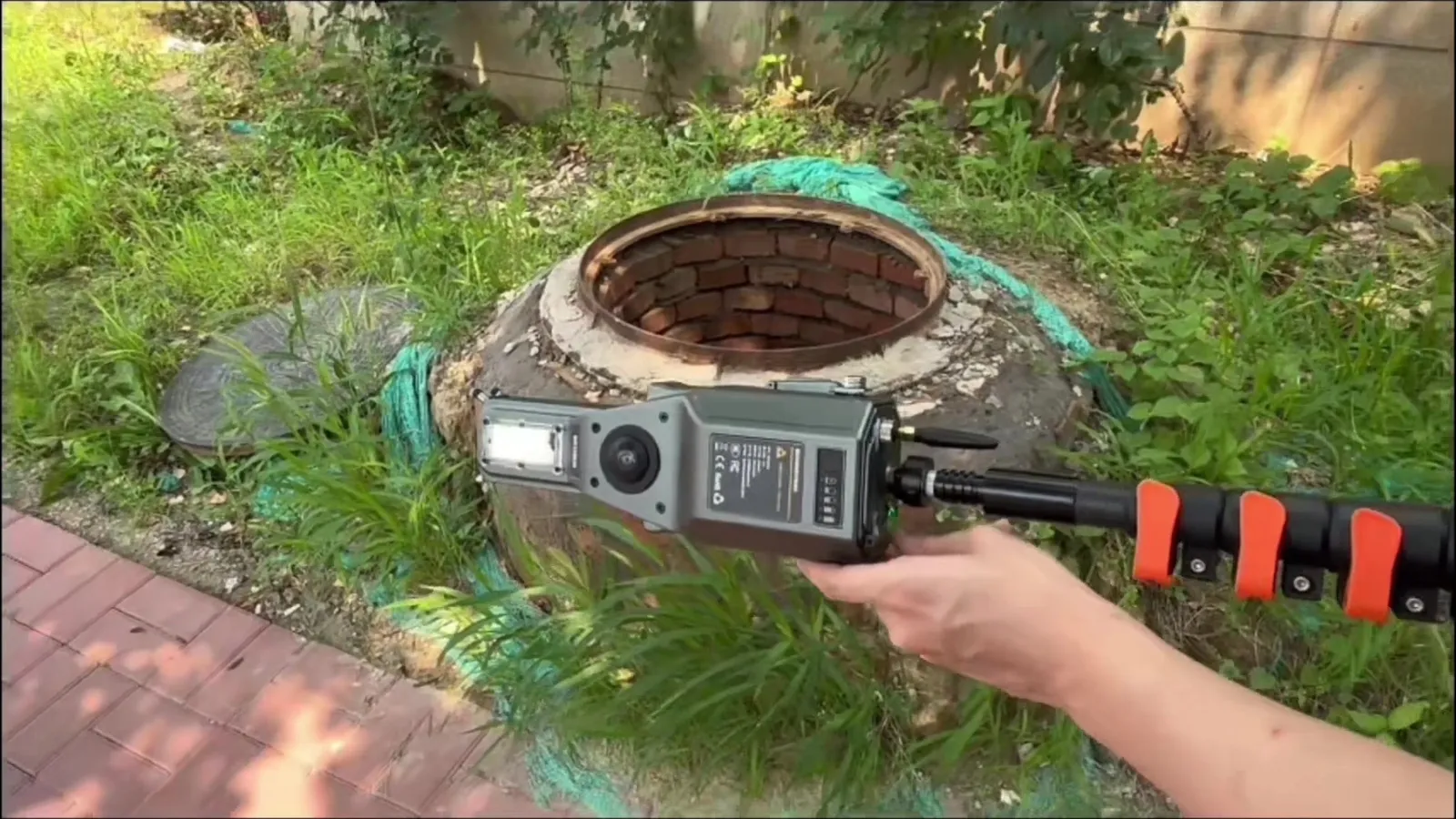
The unit rides on a telescopic pole and the whole inspection happens from the rim. That takes confined-space entry, gas exposure and fall risk out of the job, and one person can do it.
Pole-mounted manhole scanner — lower it in from the street and get video, a 3D model, an unwrapped wall image and a defect report, with nobody entering the shaft.
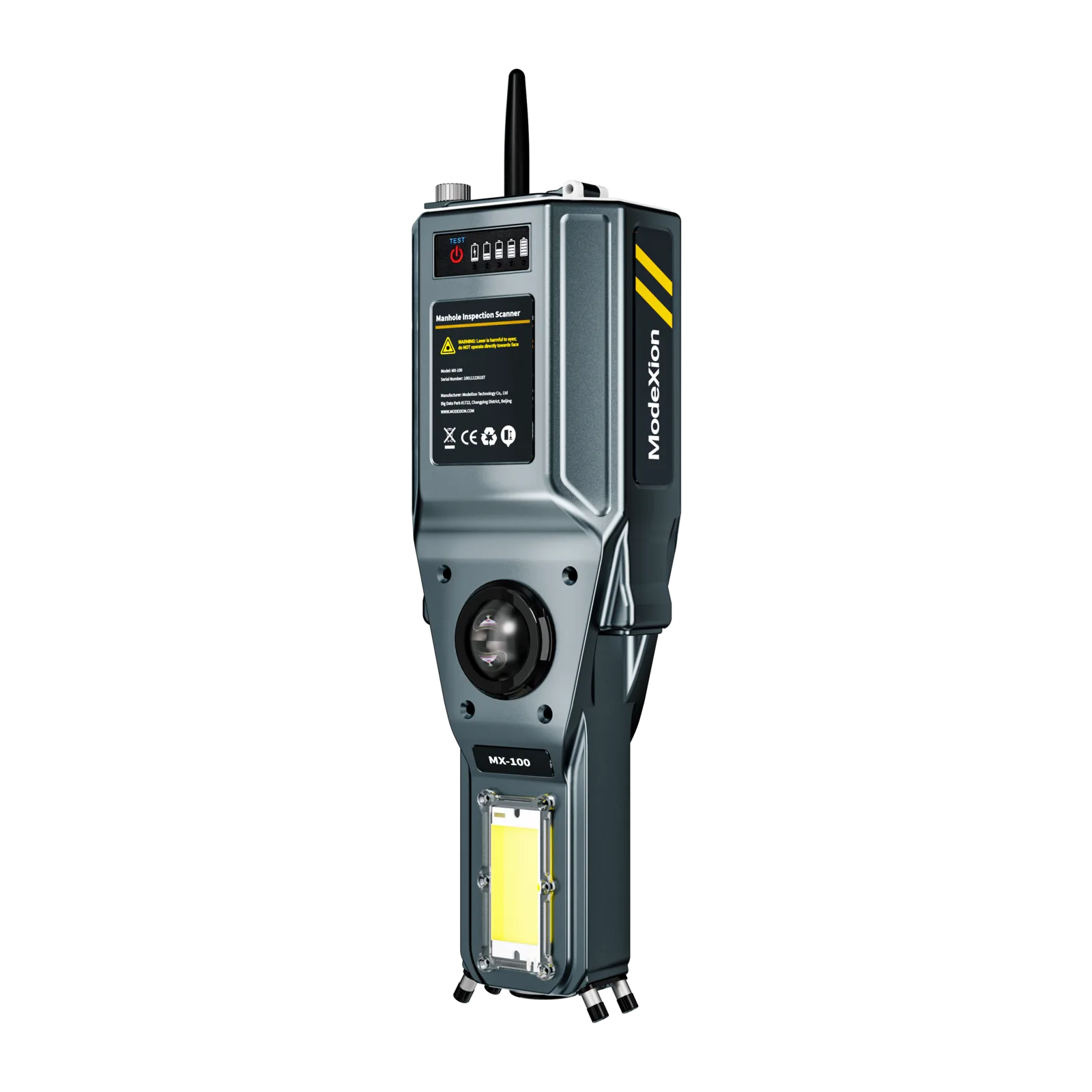
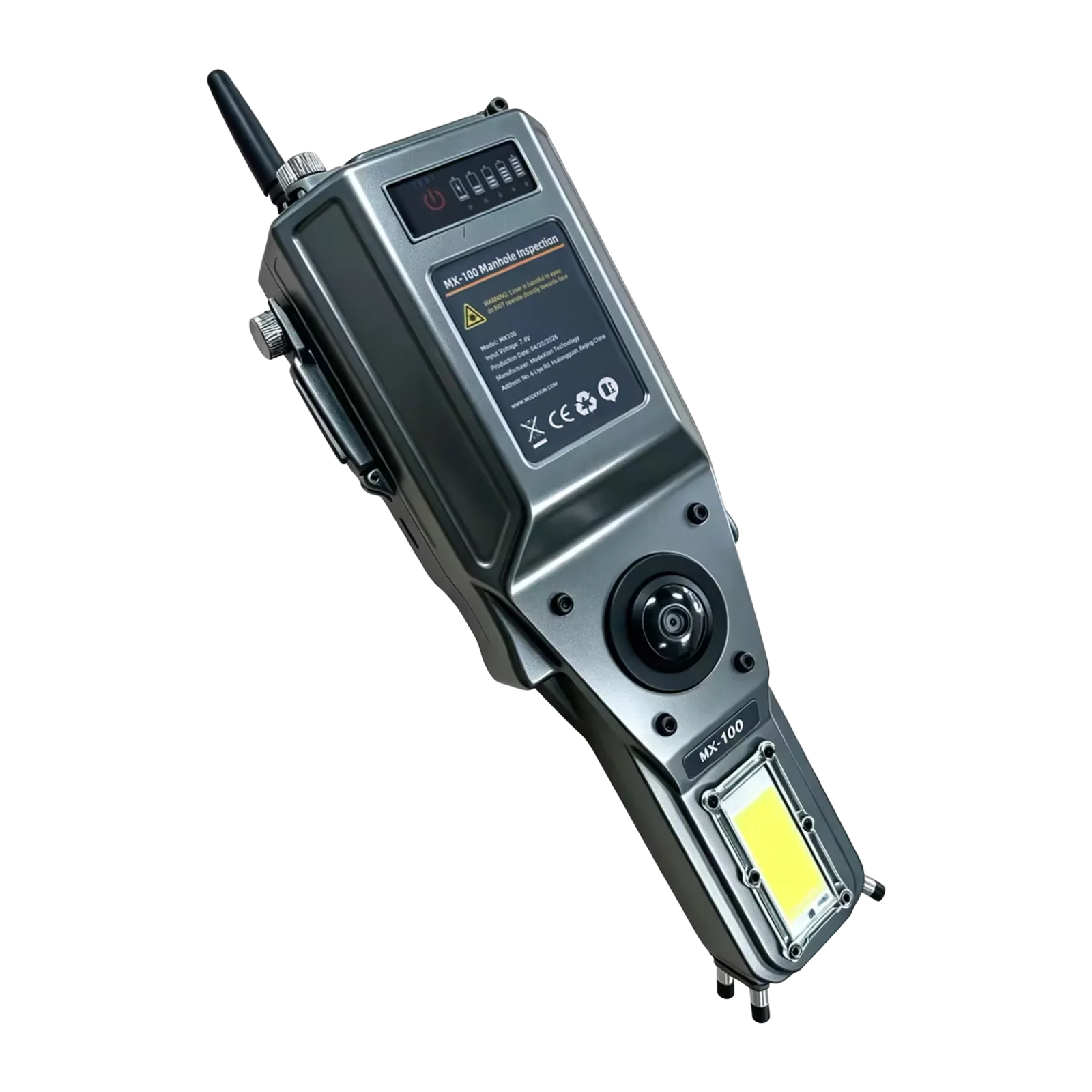
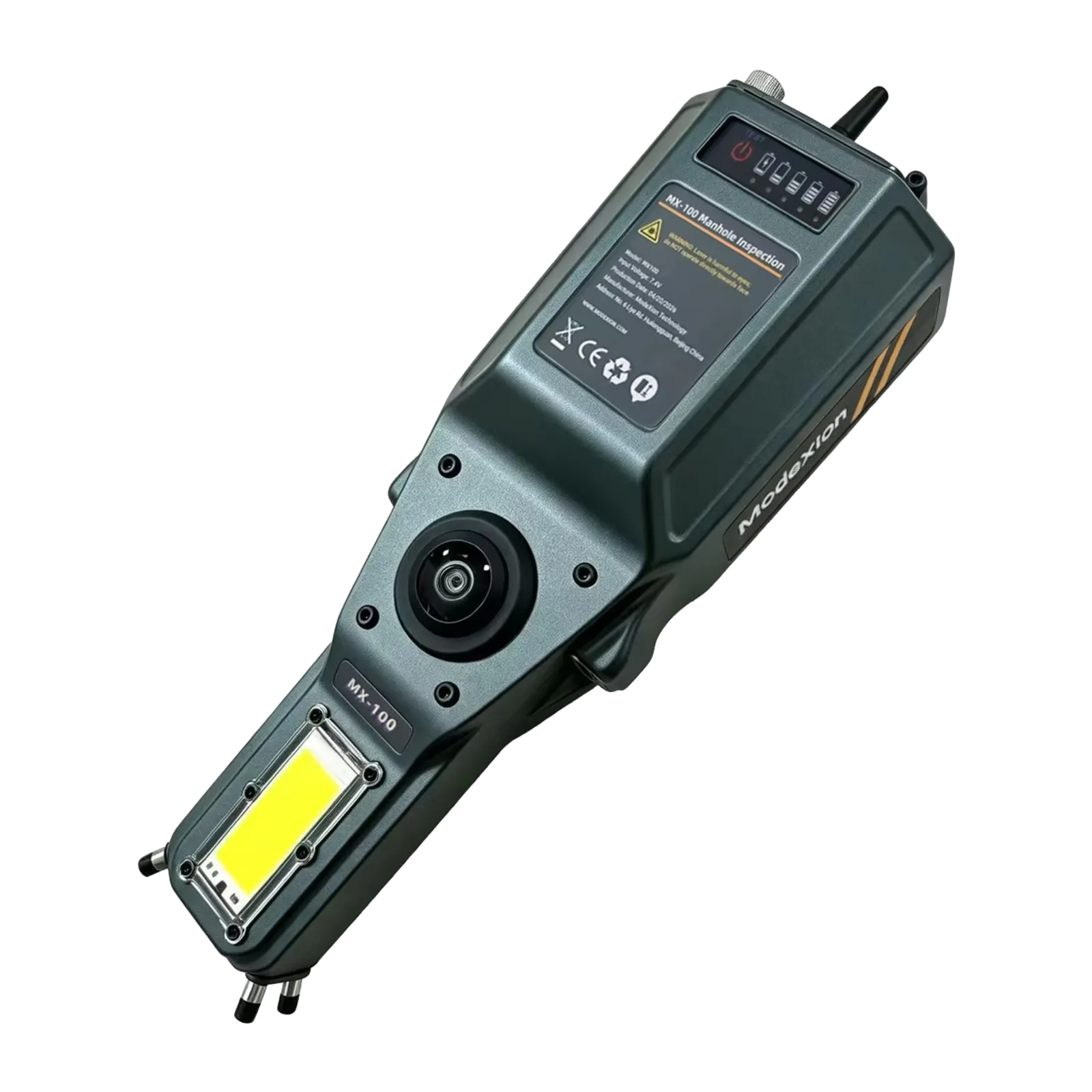
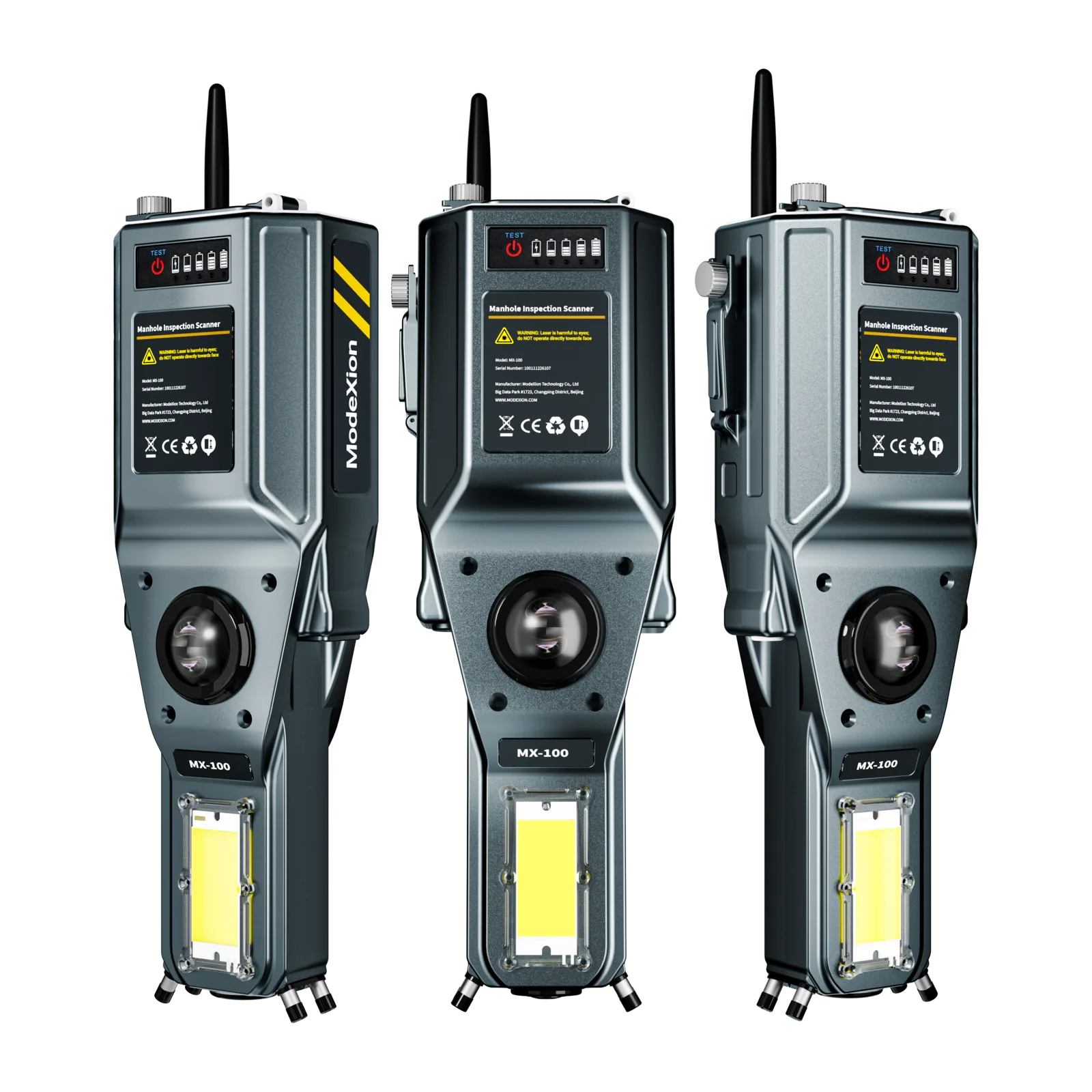
The MX-100 is built for one job: recording the inside of a manhole without sending a person down it. The operator stays at street level, lowers the unit on a telescopic pole, turns it once at the bottom and brings it back up. No confined-space entry, no gas monitoring for an entrant, no rescue setup — and one manhole takes a few minutes instead of a crew's morning.
On the way down, three low-light cameras record the floor and both walls while a laser rangefinder tracks depth. A 6500 K LED fill light lights the shaft, and the live view, depth, temperature and storage status show in a browser on a tablet or phone connected over the unit's own Wi-Fi. There is no app to install.
Back in the office, MXview turns the capture into results with one click: a textured 3D mesh, a point cloud, and the shaft wall unrolled into a flat, scaled image. Cracks, spalling, infiltration and debris are marked and measured on that image, and the software exports an inspection report together with OBJ, PLY, LAS, LAZ and E57 files for GIS and CAD.
ModeXion quotes measurement error of ±1 cm. That is the right grade for condition assessment, rehabilitation planning and digital as-built records of existing manholes; for survey-grade work on structures, talk to us about laser scanning.
Ask for a quote, or a demonstration on one of your own manholes.
The unit rides on a telescopic pole and the whole inspection happens from the rim. That takes confined-space entry, gas exposure and fall risk out of the job, and one person can do it.
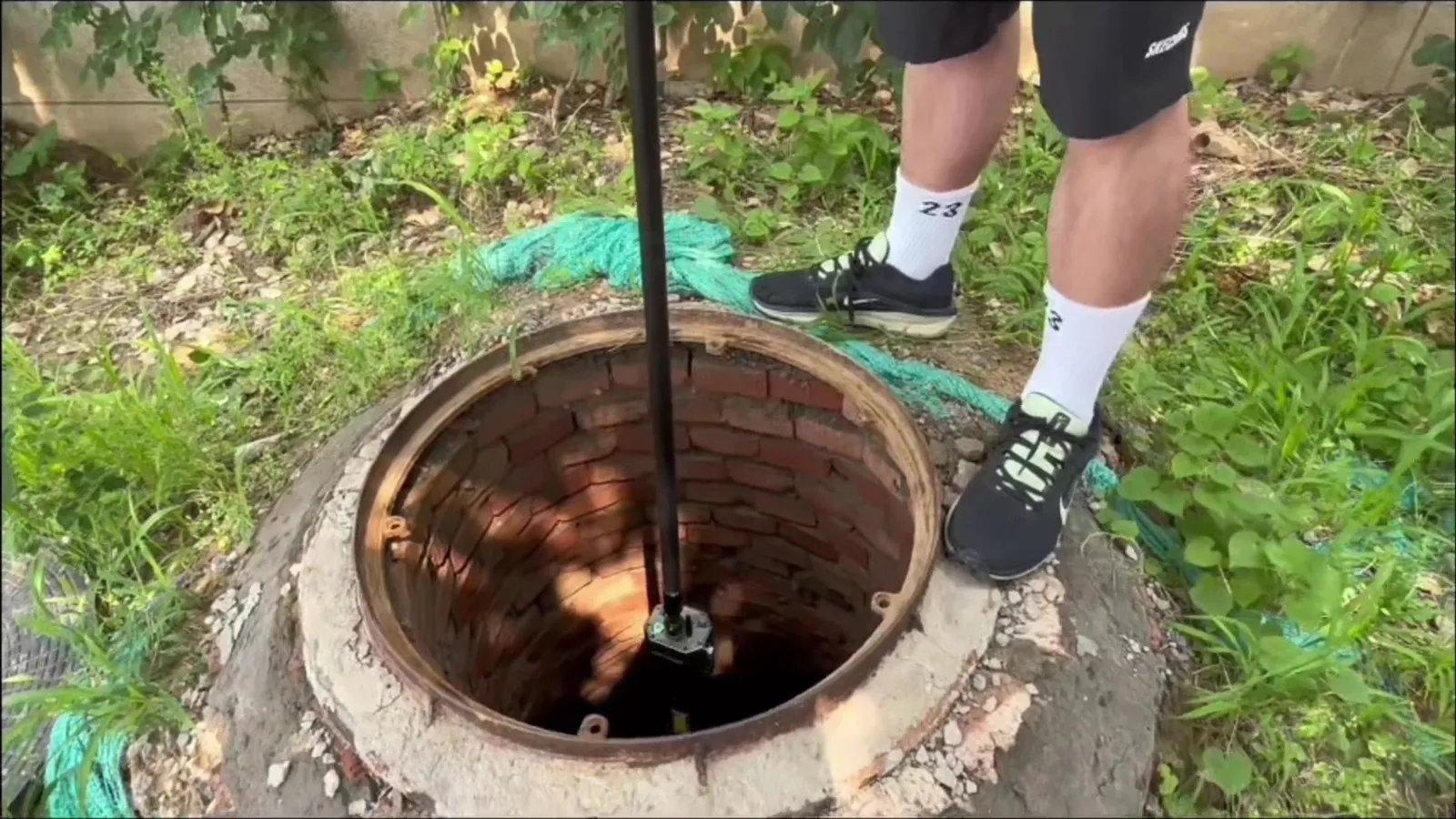
Hold it above the opening, lower it at a steady pace, turn it once at the bottom and bring it back up. The laser rangefinder logs depth the whole way down.
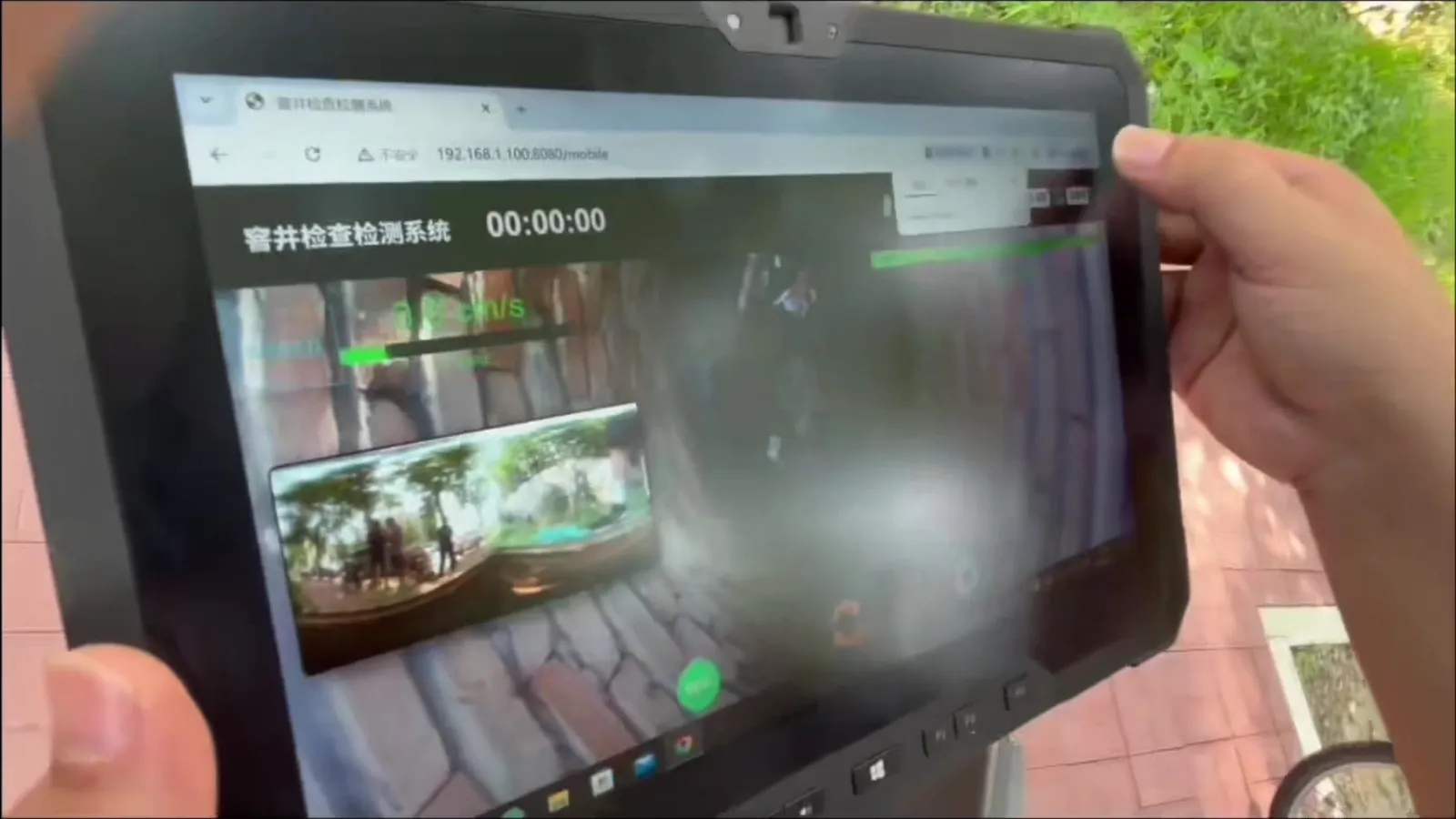
The floor and both walls stream to a browser on a tablet or phone over the unit's own Wi-Fi, with depth, temperature and storage on screen. A bad pass is caught before the lid goes back on.
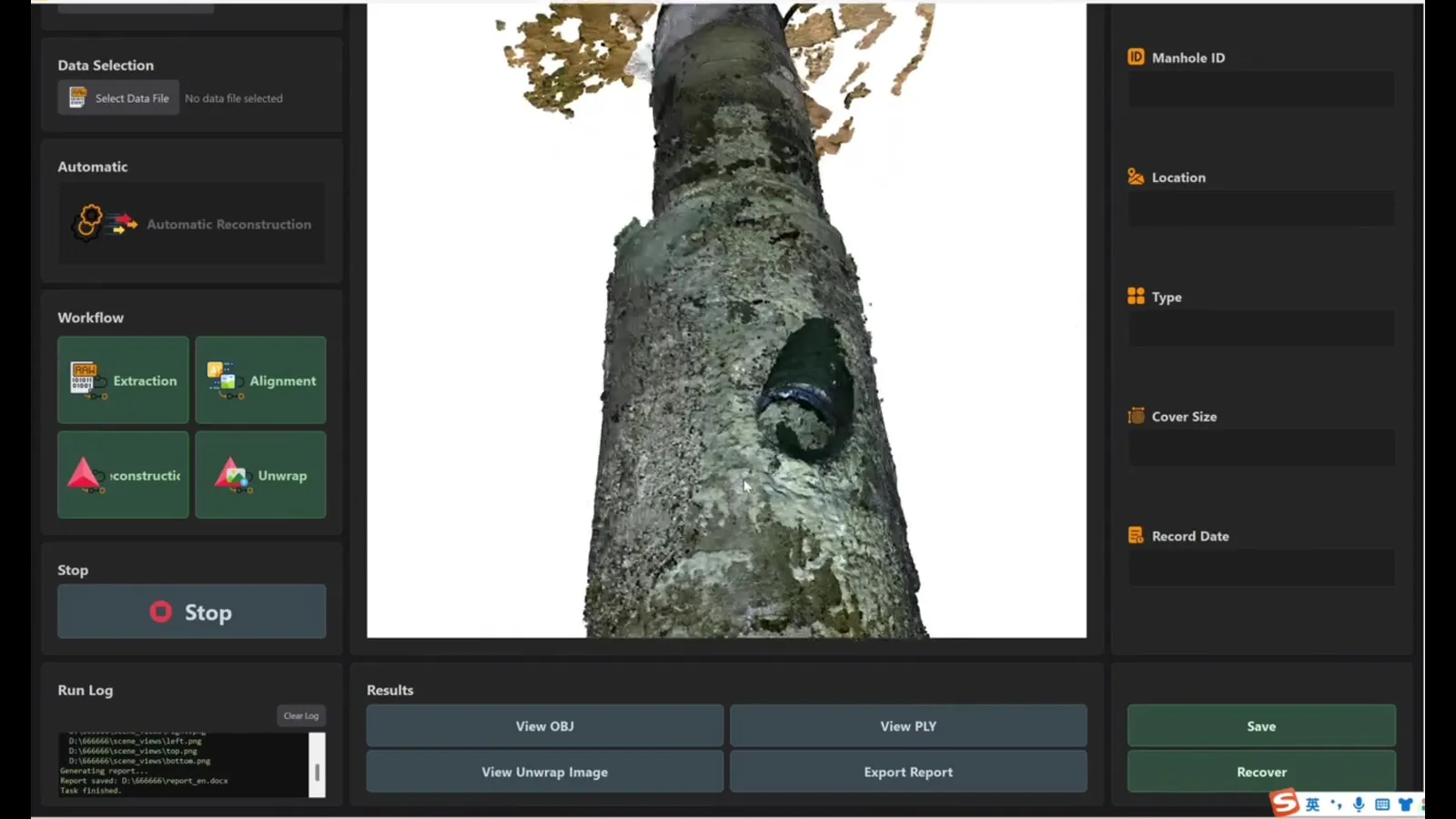
MXview extracts the images, aligns them and builds a textured 3D mesh and a point cloud of the shaft in one run — or step by step when something needs checking.
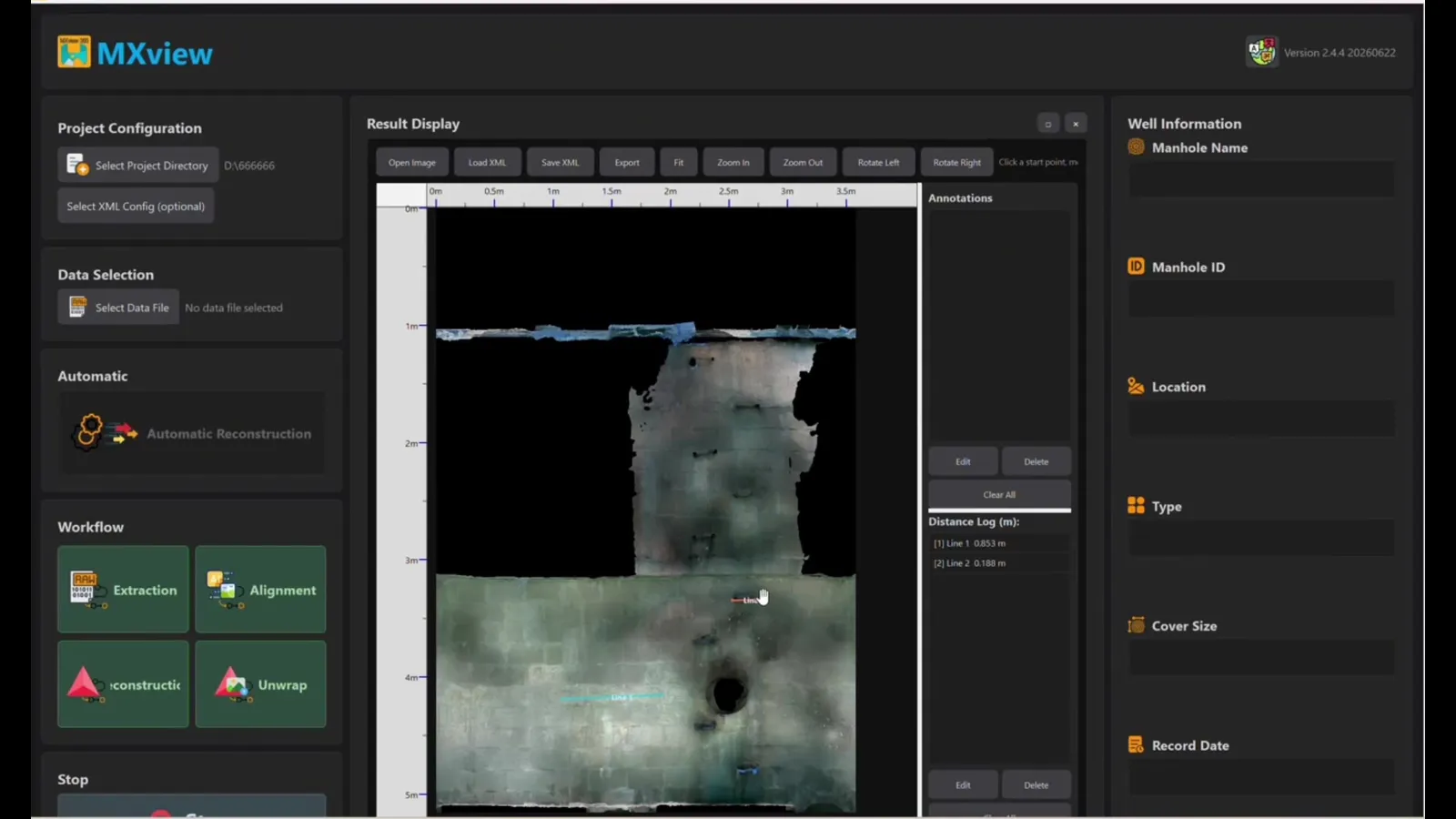
The cylindrical wall is unwrapped into one flat, scaled image. Cracks, spalling, infiltration and debris are marked and measured on it, with each annotation tied to its position in the shaft.
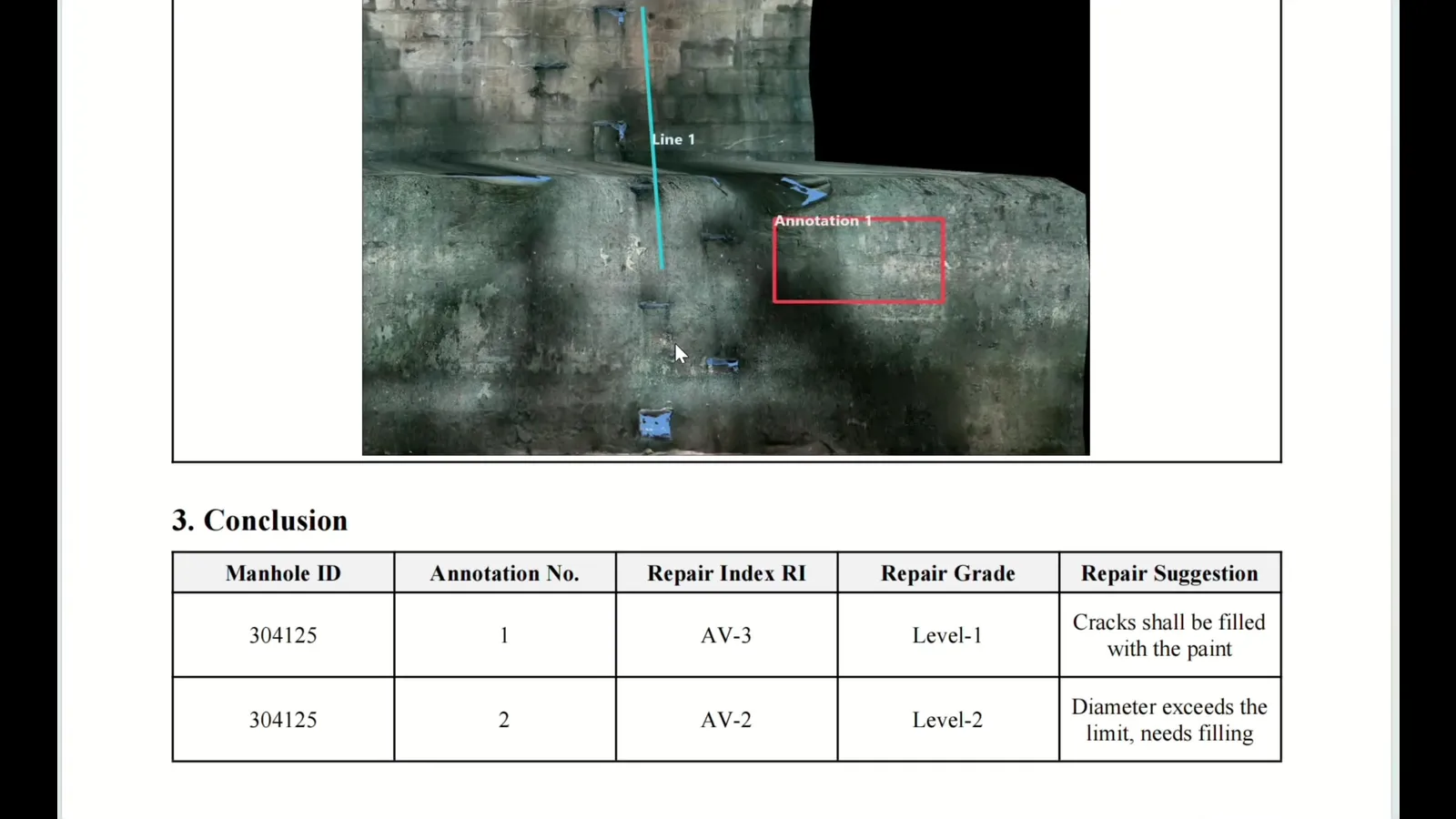
Manhole ID, location, cover size and every annotation go into an inspection report with views of the model, ready for the asset owner's records and the repair crew.
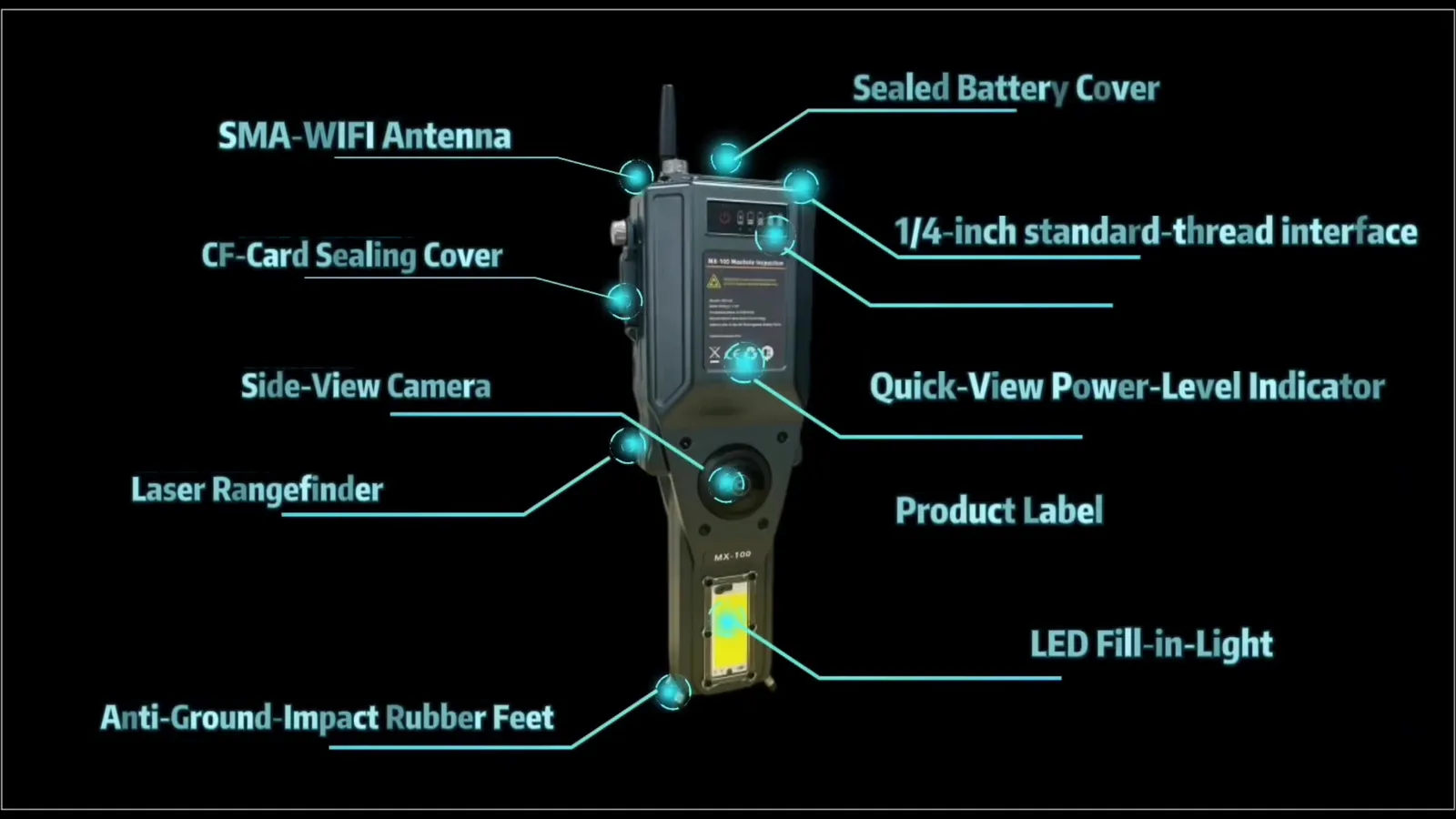
Three cameras, a laser rangefinder and pointer, LED fill light, a swappable battery and a CFexpress card in a sealed aluminium and nylon housing just under a kilogram.
LAS, LAZ, E57, OBJ and PLY go straight into GIS, CAD and point-cloud software you already use.
IP64 sealing, rubber feet against knocks at the bottom, and −10 °C to +50 °C operation.
Low-light STARVIS sensors and an adjustable LED fill light keep the walls readable without daylight.
Any tablet, phone or laptop joins the unit's Wi-Fi and runs the capture in a browser.